
VR Gaming has changed the way we play. We have now felt like we have entered another world like never before. We can wield a weapon, duck under cover, drive a car, and explore at a whole new level. But how we did get here? Being able to play outside a joystick, a keyboard and mouse, and a handheld controller have been experimented all the way back to the NES era. Developers have always looked at how we can more so feel like we are in the game. Here is a look back at some of the hardware that made headlines. Some have been more successful than others.
1. NES Running Pad, Power Glove, and Virtual Boy


Nintendo was the first that experimented motion gaming for a console as well as VR. The running pad required stomping on the blue and red circles as they represented buttons. One popular game for it was Track and Field. The faster players could stomp on the pad, the faster their on-screen character ran. It also detected jumping. Fun for awhile, but it got very tiring. The same case was for the Power Glove. It went a step further with motion gaming with requiring arm and hand movement. It ended up not selling well due to technical issues and tedious to use. The Virtual Boy gave us an idea was to what VR could be someday. It was about playing the games up close while you felt like you were right there watching.
2. SEGA VR

Sega had always tried to get way ahead of the competition. Problem was is that technical limitations stopped their projects from being successful. At least most of their experiments made it out to the market for awhile. This was not the case for the SEGA VR. Little did I know that SEGA first tried for a full VR experience. This headset did not make it out to stores. Again due to technical limitations and costs, SEGA canceled it.
3. Eye Toy


The PlayStation 2 was a successful console. It had a huge library of games, backwards compatibility for the PS1, and being the first console to successfully offer online gameplay. Motion gameplay, was another story. The Eye Toy, to say the least, wasn’t a total failure. It was simple to use and people liked the idea of it. As shown in the image in the above right, the sensor puts you in the background of the game and detects your motions. In this game shown, players use their hands motions to pull food down and make something such as a burger. It had many casual games like that. Interest was just becoming less. With the PS3 on the way, the whole thing eventually got scrapped.
4. Nintendo Wii Remote

With the GameCube’s successor, Nintendo Wii soon to be released, Nintendo decided to compete differently with Sony and Microsoft. Sony and Microsoft began competing on power, graphics, and online play. Nintendo decides to go all-in on motion gaming. Nintendo decides to reinvent how we think of a controller by making a wand which can be used as a steering wheel, a bowling ball, tennis racket, golf club, and so on. Nintendo had the idea of basic games, but being able to play them how you would in real life with this wand. There was also a nunchuck attachment that had a joystick and a front button. This assisted players when they had to move their characters around the stages, and it also allowed players to resemble holding a bow and arrow. Mini games built onto the console such as bowling, were a big hit. It was one of my favorites and really did feel like you were going bowling. The Wii was a successful console as motion gaming made its true debut here.
5. Xbox Kinect


Microsoft decides to get in on motion gaming with the Kinect. Unlike what Nintendo had, this device did not require holding a controller in your hand. You simply place the Kinect near your TV, and get ready to go. I had one of these and to this day, it is stored in a box in my closet. This thing had a solid start. Gameplay was much like the Wii, except without a controller. It’s all in your hand and foot gestures, and your whole body movement. One of my games I had for it was Wipeout, from the TV gameshow. Stomping on the ground to run, and ducking and jumping made me sweat. The Kinect proved that you could work out while playing a game. Many fitness games came out for it. There was even one for it called UFC. It could support up to four players in its radius. The Kinect brought casual gamers to the Xbox, which unlike Nintendo, is not known for casual gaming. My grandma and mom would even play some of the Kinect games with me.
It seemed the Xbox 360 had everything going for it with Kinect when voice command was put into it. You could then not only using your hand and arm movements to navigate the Home Screen, but you could tell your Xbox to play the disc, and shut off. It was very cool to do.

Sadly, the Kinect began to run its course. All these casual family-friendly games for it was also its downfall. It lacked support for major triple A games as the few that did, only wanted to put voice command in it. In Madden Football, you could tell the quarterback to hike the ball. In Mass Effect 2, you could tell your character what gun you wanted and the gun would be switched out. While these were fun additions, I and others envisioned big things. We thought of how cool it would be to feel like you are driving the warthog in Halo, or using your arm to toss a grenade.
The Kinect also had technical problems. It was picky about where you were in its radius. If you stepped outside of it at all, the game would stop and let you know. Figuring out where to place it was a chore. The lower you placed it, the farther back you had to be from it. I got to where I placed it on top of the TV as best I could. It did better with bigger living rooms. I got tired of having to move stuff out of the way to make room. There were also incidents of people accidently hitting each other during multiplayer sessions. Microsoft tried again with an all-new Kinect for the Xbox 360’s successor, the Xbox One. It allowed for up to six players in its radius. But with lack of interest, same problems going on, and little support for major games, the Kinect was done for. It sure had potential.
6. Nintendo Wii U

With the success of the Wii, Nintendo carried on as a sequel for the next console called the Wii U. It was backwards compatible, but it wasn’t so much advertised as to how it continues on from the Wii. One of the first trailers for it showed how it detects your hand movements by moving it across the screen. In the image above, you’ll notice the sensor above the screen built in to the controller. One trailer showed how you can set the controller on the floor when you’re playing a game like golf, so it can detect your swinging form. Gamers however, were more excited about its other feature. That included more so of the fact that the screen controller was like a second screen to a game. Many fans of Super Smash Bros. liked playing the game with it by not having to look at the TV. That is also what the sell mostly was, not needing the TV in order to play it. With lack of support for the motion front, it didn’t really become much of a sequel to the Wii. Gamers wanted it to be more portable than it was. It had a short life span as Nintendo moved on to their next console, the Switch.
7. Hololens

Many wondered if Microsoft would ever try again with motion gaming, or look ahead. Turns out they would look ahead as we got an early glimpse of the Hololens. Instead of going totally VR, Microsoft tried to demonstrate hologram capabilities. One televised demonstration of it showed how you could look at something like a table, and then see a 3D structure on it only seen through the headset. Sadly, this new idea never really became the next thing for gaming. It instead was something used by professionals in certain fields.
8. Nintendo Switch
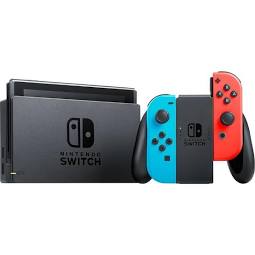
So here we are with how Nintendo currently is. They corrected something that the Wii U should have had, and that was portability. It is basically what the Wii U offered, but now you can take it on the go. It for sure has taken off from the Wii with the Joy cons. They work just like the Wii remote wand did. The sensor is built into the system, which means there is no need for a seperate attachment to hook up like the Wii. The whole screen is the console and you can set it up anywhere you want. The only problem was the task of having to swipe the joy cons up and down the sides. Nintendo fixed that in the Switch 2 by making the new joy cons magnetic clip-ons. It is so much better. This is where Nintendo will probably be at for quite some with gaming beyond just the controller.
VR


We are now here with VR as Sony and the PC go at it. Many gamers envisioned one day of feeling like you are leaving this world and going into another one. With VR, we are finally as close as can be for that.

Right before Sony jumped into VR, they tried another motion gameplay run with the PS4. It was called the PlayStation Move. Gameplay was much like the Wii, but you had two wands instead of one. It actually had a fair amount of support. Fighting games were popular on it. In a PlayStation exclusive shooting game called Resistance, a gun attachment came out that one Move controller could be placed on. You could resemble holding a gun and firing it just like at the arcade. It was a lot of fun to play. I don’t really know why Sony stopped production for it when they did. But they were on to something even bigger. Perhaps it was their way of warming us up for VR.
My first VR game I played was Doom. This is an intense, sci-fi first person shooter. I was in line waiting at PAX West. When it was turn and I put on the headset, I was blown away. I was actually spooked as I felt more than ever that I was fighting for my life. I could see all around me and my thumb and some finger movements of mine were even detected. I had a feeling that this was going to be the next thing that was going to stay around.


VR has given us the feeling of having the power, and being another character. I know I have felt like I have left this world and into another one when I have put on those headsets. There have been some good games out for it. The whole thrill of being inside your character and seeing the whole game around you taking over has made many VR games enjoyable. There are VR games that have no objective and allow to just look and play around. It helped me become familiar VR, knowing that I wasn’t having to hurry.


Arcades have also adapted VR. You will find a few VR stations in many of them. One arcade I’ve been to had four of these Omni-directional treadmills as shown in the image in the above right. The special shoes you put on for them allow to slide across with each step you take.
Looking Ahead
With the success of VR, I think we still need to have more major games support it. I think about Grand Theft Auto. Many possibilities here. Imagine being able to evermore so open a car door and steal it. Imagine if Halo went VR. Being able to actually feel like you are driving the vehicles in it and taking command of the gun turret from the back of the warthog. I think all of that could take the pressure off games like Halo, that have become so critically reviewed. I think Nintendo should go VR too to make it complete. You could totally feel like you are in the world of Mario with jumping over obstacles and shooting fireballs. Mario Kart VR would be a big sell. VR in any case had made a big impact.
Leave a Reply